

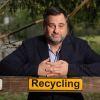

At the Kit & Fit masterclass on Wednesday we heard that 450 ebikes and escooters in Australia have caught fire in the past 18 months. Pete Shmigel sees problems first hand at the ebike recycling business he founded two years ago.
In 10 years time, according to micromobility experts, e-bikes may be about 75 per cent of the bikes used in Australia – or more than a million new ones per year.
That sounds great, right? More people out of their cars, more sustainable transport, better health results for the community. And, it is great for all those reasons.
Spinifex is an opinion column open to all our readers. We require 700+ words on issues related to sustainability especially in the built environment and in business. Contact us to submit your column or for a more detailed brief.
Except for one problem that is becoming clearer every day. It’s certainly clear to Revolve ReCYCLING, Australia’s first national platform for recycling and reusing bicycles, which is seeing an increasing number of first-generation e-bikes weekly come back to us from consumers.
The problem is this. E-bike batteries can blow up. Any Google search takes you to dozens of YouTube videos – both overseas and in Australia – about fires caused by the rechargeable lithium-ion batteries used to power e-bikes.
Sadly, this has even led to the loss of life in the US.
In New York, for instance, there has been a dramatic increase in battery-related fires in recent years, with incidents skyrocketing from 30 in 2019 to 220 in 2022, according to the New York City Fire Department. Of the fires last year, six resulted in deaths.
“Once the fire starts going, everything inside the battery will burn,” KM Abraham, a lithium-ion battery expert and former professor at Northeastern University recently told The New York Times.
E-bike batteries consist of single or multiple lithium-ion cells and a protective circuit board.
The cells are composed of a negative electrode and a positive electrode separated by a thin porous barrier, known as a separator, allowing lithium ions to move from one side to the other through a liquid or gel that conducts ionic current.
The movement of lithium ions from the negative to the positive electrode inside the cell and electrons through the external load creates the electrical current that gives the battery juice to power devices.
Lithium-ion batteries contain a large amount of energy stored in a small volume, and many of its components can be highly flammable. They have complex chemistry and structure, so there are multiple ways they could catch fire and potentially explode.
Physical damage, such as impact from a crash, improper use, or defects or other manufacturing issues can lead to short-circuiting or other failures that cause the energy inside the battery to be released in an uncontrolled fashion.
E-bike batteries don’t only blow up when in bad charging situations. They can also blow up from heat and pressure. That includes if they’re compacted on a garbage or recycling truck, at a waste disposal facility, or a kerbside or metal recycling facility. With other batteries, they’re one of the biggest hazards, OHS and insurance problems for the resource recovery sector.
The risk goes up if the batteries are of cheaper – usually Chinese – manufacture, such as those typically seen on the low-priced e-bikes of delivery riders.
In March, New York City, the epicentre of e-bike usage, passed laws to minimise the risk, including requiring e-bike batteries sold in New York City to meet recognised safety standards, and banning local repairers from tampering with or selling repaired batteries, which are more likely to catch fire.
Start at the root cause of the problem
In Australia, new battery stewardship schemes will accept e-bike batteries, but somebody has to cover the cost of getting them in the battery recycling system in the first place.
That’s one set of approaches. However, it seems to me that it’s dealing with a symptom rather than cause.
We need to ask different questions. Why not minimise the risk of e-bike batteries more effectively and efficiently at the beginning – and not end – of their lifecycle? Why not go up the supply chain and prevent bad e-bike batteries – and bad e-bikes that break down too soon?
Avoid the waste on wheels – how about some regulations?
Indeed, bad e-bike batteries come on bad e-bikes that are poorly designed, very difficult and expensive to disassemble, use cheap disposable parts, have very low durability, and are usually bought online. They are frankly waste on wheels. Some barely last a month or two.
There are currently no guidelines, no requirements, no codes of practice, and no restrictions on the types of e-bikes or batteries that can be imported or sold in Australia. There is no public policy that states Australia’s expectations about quality, performance and recoverability of e-bikes. There is simply no responsibility on anyone who manufactures, imports or sells bad e-bikes.
Why not minimise the risk of e-bike batteries more effectively and efficiently at the beginning – and not end – of their lifecycle?
Several years ago, China banned Australian plastic and other material from being imported to China. Now, China and others are exporting a sneaky, dangerous and expensive waste problem to us.
It’s currently open slather. When that is the case, as resource recovery consultant Mike Ritchie has long said, waste will always settle at its cheapest point. Indeed, physically unsafe and environmentally damaging disposal is what is now increasingly happening.
Good news: there’s a new sustainability committee of the Bicycle Industry Association
The good news is the industry is talking about and starting to address these issues. There is a sustainability committee of the Bicycle Industry Association, including high-quality manufacturer, importer and retail representatives, that is currently trying to measure the scale of the issue and then identify possible solutions for batteries (as well as rubber from tyres).
We’ve said to them what we say here. We need to think more broadly. Yes, by all means we have to mitigate the risk of e-bike batteries, but the best way to do that is a product stewardship for e-bikes across the supply chain.
One of the ways to promote product stewardship – and making overseas manufacturers think about the durability and recyclability of what they’re putting in the boxes that go on the ships to here – is considering World Trade Organisation provisions.
Under WTO rules, members can adopt trade-related measures aimed at protecting the environment.
We have to start somewhere. The federal government has responsibility for product stewardship and the minister has said she will not hesitate to use associated regulatory powers.
Environment Minister Tanya Plibersek, whose electorate probably has more e-bikes than any other, doesn’t need to do that. All she needs to do is charge her department with conducting a serious analysis and scoping of e-bike importation, sales, usage and e-bike battery risks as a starting point.
The numbers won’t lie. The numbers are likely to show that it’s the most affordable and most precautionary thing to do to put some rules down around e-bikes and their batteries from the beginning of their life, not their end.
Otherwise, we as a society will literally have to deal with a burning platform.
Pete Shmigel founded Revolve ReCYCLING and was previously chief executive officer of the Australian Council of Recyclers and Lifeline Australia.
